
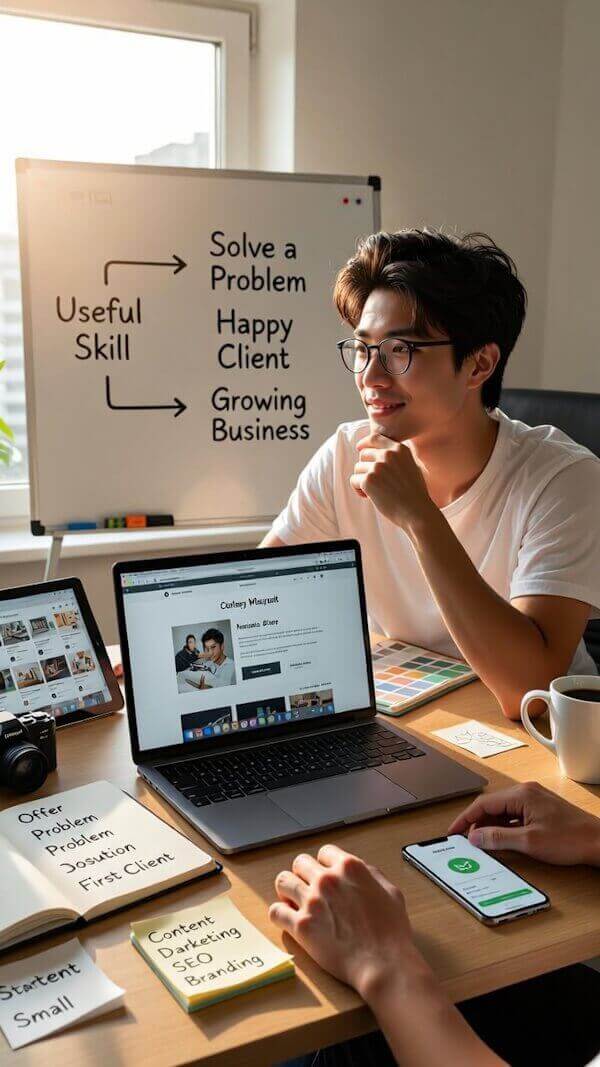
Becoming an entrepreneur doesn’t require a huge investment, a color-coded 40-page business plan, or a dramatic resignation email. Start with one useful skill, one clear problem, and one person willing to pay for your help. Keep the financial risk manageable, and that idea could become a real business opportunity.
If you create content, manage marketing, design visuals, or help brands show up online, you may already have the raw material. The move is turning what you know into an offer people can understand and buy.
Key Takeaways for Becoming an Entrepreneur
- Start with a skill you already use, then connect it to a problem people will pay to solve.
- Use simple, low-cost methods and take calculated risks to test a small offer before buying expensive tools or leaving your job.
- Combine services and digital products in a flexible business model that creates immediate economic value.
- Use AI for research, drafts, visuals, and repurposing, but keep human judgment in charge.
- Track customer feedback, delivery time, profit, and repeat interest before expanding.
Why Becoming an Entrepreneur Is Easier Than You Realize
Entrepreneurship isn’t reserved for people building the next giant tech company. An entrepreneur spots a market gap, solves it well, and gets paid for the result. That kind of Innovation can contribute to Economic growth.
Maybe you write blog posts that bring in traffic. Maybe you design visuals that stop the scroll. Maybe you understand email, SEO, social media, or AI-assisted content better than the business owner trying to do everything between client calls. That knowledge has value.
The usual fears show up fast: “I need more money.” “I need to know everything.” “My idea has to be perfect.” Nope. You need a starting point. Keep your steady income, start part-time, and learn with low-stakes tests.
You Can Start With Skills You Already Use
Pick one skill and make the result easy to understand.
Business model shifts can challenge outdated agency structures and open new paths to economic mobility. They also give strategic entrepreneurship a practical starting point. A solo provider can help a local small business with focused, affordable support.
You can package your knowledge into a workshop, template bundle, prompt library, or consulting session. Just don’t offer “marketing help for everyone.” That’s a fog machine.
Try this instead: “I help independent coaches turn one long blog post into a month of branded social content.” One audience. One clear result. Much easier to sell.
Becoming an Entrepreneur: A Small Business Idea Can Begin With One Customer
Before you build anything, talk to people who might buy. Ask what keeps taking too long, what they’ve already tried, and what a better result would look like. One paid project gives you more than money.
It gives you proof, customer feedback, practice delivering your message, and the start of a case study. That quick reality check can save you months of guessing in a Google Doc.
Choose a Low-Cost Business Model That Fits Your Strengths
A Business model sells your time, expertise, or a repeatable process. A service sells your involvement, while a productized service turns that process into a consistent offer. A digital product sells an asset people can use without your direct involvement every time.
Turning repeated manual work into a productized service puts practical business change to work. It can create economic value while making delivery easier. Services may bring in money quickly, but your calendar has limits.
Digital products can grow without taking more of your time, but they need real demand. Consulting may require fewer tools, while memberships need steady support.
Starting with your own funds keeps a startup focused on useful work instead of unnecessary overhead. Basic costs may include a domain, software, payment processing, business registration, taxes, and insurance.
Check current guidance from the U.S. Small Business Administration before making decisions that affect your records or legal setup. For inspiration, this small business idea roundup shows how many useful businesses begin with practical skills, not a warehouse full of inventory.
Service Businesses Are Often The Fastest Way To Start
Services let you earn before you have a huge audience or a polished product library. You can offer blog management, SEO support, custom graphics, AI-generated visual concepts, animated explainers, short edited AI videos, or video strategy.
A clear business model starts with a focused package and a defined scope. Replacing scattered tasks with one repeatable offer is a smart way to create meaningful change. It can build economic value without requiring reckless risk-taking.
For example, offer four blog graphics, two short AI-assisted videos, and a monthly content plan for one flat rate. Less chaos. Fewer “Can you also…” messages at 10:47 p.m.
Digital Products Let You Earn From Repeatable Work When Becoming an Entrepreneur
A good digital product fixes one narrow headache. Think content calendars, prompt libraries, brand templates, checklists, mini-courses, or DIY marketing tools. Turning useful expertise into a self-serve product can give a small startup a fresh path to grow.
It can produce Economic value while keeping Risk-taking measured. Don’t spend three months building a giant course before anyone asks for it. Sell a small version first. If people buy and use it, improve it. If they don’t, you saved yourself a spectacular amount of unnecessary spreadsheet time.
How To Become An Entrepreneur Without Taking A Huge Risk
Take 30 days to test a business idea with smart risks and a clear plan. Choose one audience and one problem, create a simple offer, speak with potential buyers, set a starter price, and complete one small test project.
This is practical experimentation, replacing assumptions with evidence. A small test can support economic growth without putting your savings at serious risk.
Use AI to organize research, create outlines, draft content, develop visual concepts, write scripts for AI-assisted videos, and repurpose approved material. Review every output for accuracy, originality, brand fit, and privacy. AI is fast. It is not your legal department, editor, or customer relationship manager.
Write A Clear Offer People Can Understand
A strong offer turns a promising Business opportunity into a testable service. It answers five questions: who it helps, what problem it solves, what’s included, how long it takes, and what result the buyer can expect.
For example: “I help local home-service businesses turn one existing blog post into four branded graphics and two short AI video summaries within seven business days.”
That’s clear. “I help businesses grow online” is not. It sounds nice, but it tells a buyer almost nothing.
Find First Customers Through Trust, Not Pressure
Start with people and places where trust already exists. Reach out to former clients, professional communities, referrals, LinkedIn connections, local businesses, and email contacts. Publish helpful content that answers questions your buyers already ask.
Community engagement can make social entrepreneurship work, especially when it addresses a local need. These connections can support economic mobility by helping small organizations find useful marketing services. Referrals can also open new doors by connecting overlooked businesses with more customers.
A sample, a simple portfolio, or a before-and-after example lowers the risk for a potential customer. Small business video marketing can also help explain an offer before a sales call, especially when your visuals show a real process or result.
Clear, useful communication can support positive change by replacing outdated marketing tactics.
A customer story doesn’t need a giant revenue claim to work. Saved time, better consistency, and less confusion are real outcomes when they are honest and specific.
Ask for permission before sharing customer feedback. Keep claims accurate. A quote like “The process saved me three hours a week” is far more believable than a shiny promise that makes people squint.
Know When To Keep, Change, Or Drop The Idea
Track replies, discovery calls, sales, delivery time, profit, repeat interest, and customer feedback. Use those results to make smart, deliberate changes instead of guessing.
A slow first week doesn’t mean the idea is dead. But repeated silence is information. Change the audience, problem, offer, price, or message. Measured risk-taking means changing your plan when new evidence points you in a different direction.
Don’t keep repainting the same door when nobody wants to walk through it. Every useful change can support economic growth and make room for better ideas to take hold.
Build An Entrepreneurial Business That Can Grow With You
After a few projects go well, create simple systems. Use templates for proposals, onboarding emails, project steps, invoices, content plans, follow-ups, and records. These repeatable systems add value and keep your future self from storing every client detail in a haunted filing cabinet.
Set clear limits for revisions, response times, and project scope. That’s strategic entrepreneurship in practice: protect your creative energy and avoid unnecessary risks. Choose tools that save time, and replace outdated workflows with better ones.
Before leaving your full-time job, set a realistic income goal and save enough for emergencies. A founder also needs steady revenue, repeat customers, manageable costs, and a clear plan for health coverage and taxes. These habits support local economic growth and help turn steady demand into lasting economic value.
Avoid The Mistakes That Make Becoming an Entrepreneur Feel Harder
Don’t try to serve everybody. Don’t underprice because you feel new. Don’t buy 14 tools before your first sale. And don’t copy a competitor so closely that your brand becomes their awkward cousin.
Customer research matters more than a perfect logo. It helps a Small business create Economic value around real customer needs. Contracts and taxes matter more than trendy fonts, so get qualified legal or financial advice when your situation calls for it.
If you’ve practiced Intrapreneurship inside a company, bring that problem-solving mindset to your own operation. A lean solo-business perspective supports strategic entrepreneurship, keeping expenses low while reducing unnecessary Risk-taking.
Use Marketing Content To Become Easier To Find
Publish content that answers buyer questions. Useful blog posts, emails, case studies, social posts, AI-generated visual concepts, and short edited AI videos can build familiarity before someone is ready to buy.
Pick two or three channels, not seven. Turn one strong idea into a blog post, a carousel, a short AI video, and an email. Reuse the message without making every post look like it escaped the same template factory.
Keep improving your offers through smart pruning: remove what customers don’t value and strengthen what they do. A small business that communicates clearly can support economic growth by making useful services easier to find.
If you’re looking for real questions people ask about starting a business with little money, home-based business discussions can reveal common concerns. Use them as conversation starters, not fixed market research.
Frequently Asked Questions About Becoming an Entrepreneur
Do I Need A Business Degree To Become An Entrepreneur?
No. Many people build a small business without one. Entrepreneurship still requires basic skills in sales, pricing, customer service, finances, and marketing. You can learn through practice, reliable courses, mentors, and customer feedback.
How Much Money Do I Need To Start A Business?
It depends on the model. A small business may need basic software and a domain, while inventory, office space, paid ads, and physical products can quickly raise costs. List essential expenses and test demand before spending heavily on your business venture.
Can I Become An Entrepreneur While Working A Full-Time Job?
Yes, and building a Startup part-time can reduce financial pressure. Review your employment agreement, avoid conflicts of interest, protect employer information, and set work hours that don’t eat up every evening.
What Is The Best Business Idea For A Beginner?
The best idea solves a real problem with a skill you can deliver well. Choose a focused business venture and test it with a simple Business plan. This approach supports entrepreneurship while creating useful economic value, rather than chasing a trend with zero customer proof.
How Can AI Help A New Entrepreneur?
AI can support a Startup with brainstorming, research organization, draft content, image concepts, video scripts, repurposing, and workflow support. Check facts, edit for your brand, and use customer data with permission and care.
When Should I Leave My Job To Run My Business Full Time?
There isn’t one magic number. Look for steady revenue, repeat customers, reliable delivery systems, savings, manageable expenses, and a clear plan for taxes and health coverage. A growing Startup can support entrepreneurship and economic mobility when it creates consistent economic value. Make the call based on evidence, not one exciting month.
How Can I Fund An Early-Stage Startup?
A high-growth Startup may seek Venture capital or Angel investors once it shows strong demand and room to scale. Capital access differs for a lean small business, which may rely on savings, customer revenue, loans, or grants. A clear Business plan can explain your market, costs, and growth strategy, while the Small Business Administration offers guidance and funding resources.
Final Thoughts About Becoming an Entrepreneur: Start With One Useful Move
Becoming an Entrepreneur doesn’t require knowing everything on day one. It starts with one useful skill, one customer problem, and one small paid test.
Pick the offer you can explain in a sentence. A clear Business opportunity may be closer than you think. Talk to a potential customer this week. Real feedback will teach you more than another month of waiting for the perfect idea.
Taking action on a Business opportunity turns practical skills into real momentum, which is how becoming an Entrepreneur begins.
Originally published December 20, 2021; Republished August 4, 2026 to update content and add video.

Marissa Perez wants to share her knowledge with those who have decided to take on entrepreneurship. She co-created businesspop.net to provide insight and advice to those who aspire to succeed in owning a business.


0 Comments