
YouTubers and bloggers keep asking the same thing about real video vs. AI video: Should you show up on camera, or let AI-generated videos help you publish faster? As AI-generated videos become more prevalent, creators are looking for ways to produce authentic content while maintaining efficiency. In my case study, the answer wasn’t a simple win for one side.
My comparison looked at real video vs AI video through the lens that matters most to creators: results, effort, and audience response. The goal was practical, not ideological, so the lessons are useful if you want more reach without losing trust.
Key Takeaways
- The case study shows no clear winner in real video vs AI video—real builds trust through natural presence, while AI excels at speed and scaling content output.
- Fair comparisons control for topic, audience, platform, length, and metrics like views, watch time, clicks, comments, and production time to reveal true performance differences.
- Real video shines for personal stories, opinions, and tutorials where credibility matters; AI video powers blog summaries, social snippets, and quick tests without constant on-camera time.
- A hybrid approach wins: intentionally mix both, optimize AI for naturalness, and disclose sources to maintain audience trust while growing reach faster.
How Does This Video Case Study Compare Real Video vs AI Video Fairly
It started organically. I launched a new YouTube channel tied to one of my blogs and posted all-real videos. The views exceeded my expectations, sparking curiosity about my main channel, Inspire To Thrive.
That’s when I began systematically testing real on-camera videos against AI-generated ones using tools that allowed voice cloning and avatar generation. The goal wasn’t to pick a side but to find a sustainable system for consistent publishing without burnout.
That matters because the same standard shouldn’t judge a personal story and a quick explainer. Same timing helps too, because a weekend post and a weekday post can pull different behavior.
What Stayed the Same in Both Videos
The topic, target viewer, platform, and call to action need to match as closely as possible. Video length and metadata were also controlled, ensuring neither video relied on engagement bait to inflate numbers.
Otherwise, you’re not comparing formats, you’re comparing two different jobs.
What Metrics Mattered Most
I focused on simple performance metrics: views, watch time, clicks, comments, and time saved in production. For bloggers and YouTubers, those numbers tell a fuller story.
Reach matters, but so does whether a video supports your blog, brand, or channel goals.
How This Case Study Began
It started organically. I launched a new YouTube channel tied to one of my blogs and posted all-real videos. The views exceeded my expectations, sparking curiosity about my main channel, Inspire To Thrive.
That’s when I began systematically testing real on-camera videos against AI-generated ones using tools that allowed voice cloning and avatar generation. The goal wasn’t to pick a side but to find a sustainable system for consistent publishing without burnout.

It made me think about my main channel for Inspire To Thrive. That’s when I started testing real video vs AI video.
Where Real Video Had the Edge, and Where AI Video Surprised Us
Why Real Video Often Feels More Personal and Credible
Real video delivers something AI still struggles to replicate in 2026: fully authentic human presence. Subtle details matter, such as:
- Natural skin texture with pores and imperfections
- Synamic lighting and shadows on the face.
- Realistic eye reflections and micro-expressions.
- Varied blinking patterns.
- Genuine pauses that reflect thinking.
These elements help viewers feel a real connection, especially in opinion pieces, personal stories, product reviews, or tutorials, where credibility drives action. The “uncanny valley” effect, where near-perfect but slightly off AI faces or movements create unease, can still appear in close-ups or emotional delivery, reducing trust.
In my tests, real videos often generated more thoughtful comments and a stronger sense of community. Audiences seem to reward vulnerability and lived experience, particularly when sharing opinions or behind-the-scenes insights.
That said, human oversight still significantly improves AI outputs. Viewers tolerate (and even appreciate) AI assistance when the final result feels intentional and transparent.
If trust is the goal, human oversight in AI video production matters too. People don’t mind AI help as much as they mind content that feels unchecked.
How AI Video Can Save Time and Help Content Scale
The AI video surprised the test in a different way, despite limitations like edge artifacts and background inconsistencies. It made it easier to turn blog content into short clips, test hooks, and publish more often. When time is tight, speed isn’t a shortcut; it’s breathing room.
That makes AI useful for:
- Summaries.
- Short-form posts.
- Early idea testing.
It may not replace your best camera-led content, but it can keep your content engine moving.
Recent trends show that AI excels at high-volume tasks such as explainers, summaries, and refreshes of evergreen content. One study on teaching videos found participants achieved similar learning outcomes with AI versions, though they slightly preferred the human experience for engagement.
For performance marketing or quick tests, AI can deliver strong results in a fraction of the time and at a fraction of the cost.
Real Talk: Sometimes Real Video Actually Saves Time
The short video above I made took 2 minutes. I knew what I wanted to say and got it right on the 2nd try, in my car after an afternoon walk. There are times when I struggle to generate an AI video I like, and it can take up to 30 minutes to get it right.
This short video example below took about 30 minutes – it was the first one where I used my cloned voice.
The Real Video vs AI Video Case Study Results:
Here are the results of the real video vs. the AI video from my YouTube Studio: As you can see, the most-watched video was the last real video I made.
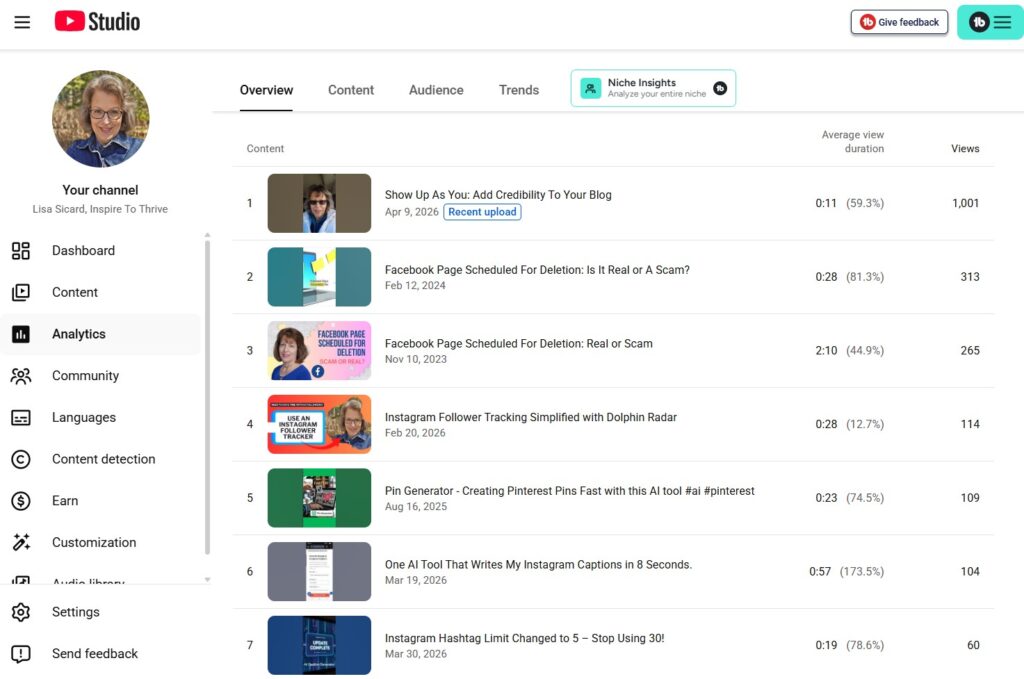
And more data from the case study in the YouTube Studio: Now, I note that the most-viewed video lasted only 7 seconds. Going forward, I will experiment with shorter videos, 15 seconds or less. I’ve read that 15-30 seconds is the sweet spot for most YouTube shorts.
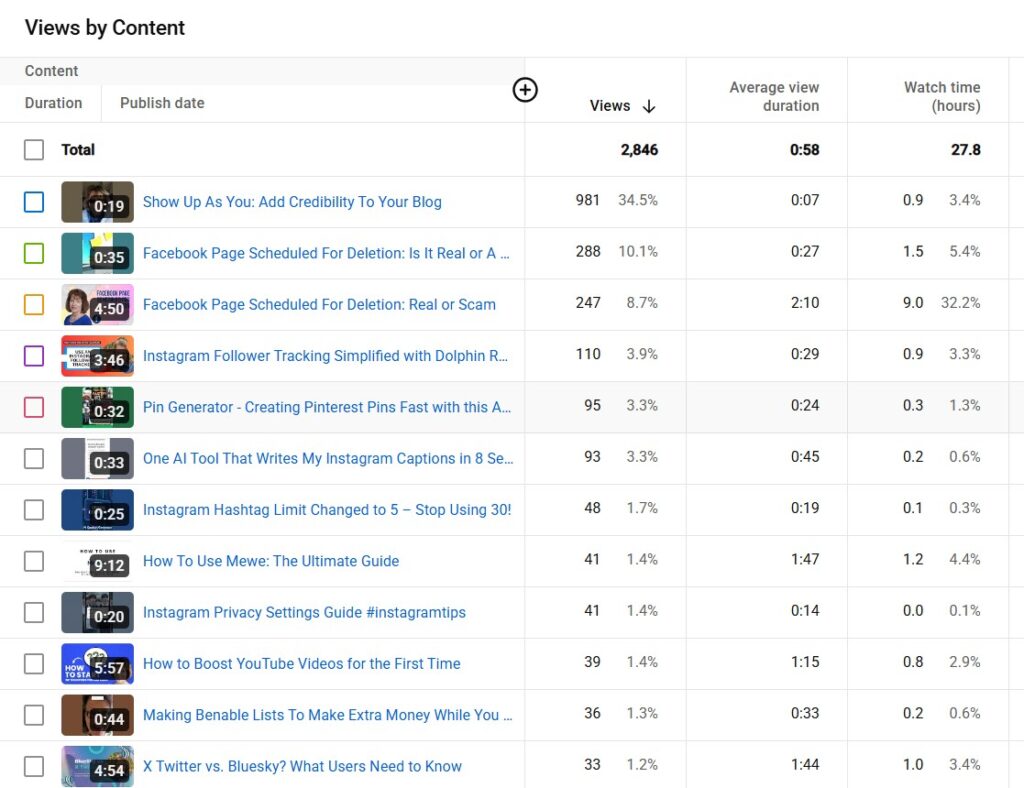
The lesson? Real video can be lightning-fast when inspiration strikes and your message is clear. AI shines when you need volume or when on-camera time isn’t feasible.
The Smartest Takeaway is Not Real Video or AI Video, but Using Both Well
My case study points to a hybrid plan. Use real video where trust carries the message. Use AI video powered by generative AI models, where speed and consistency help more.
In other words, let each format do the work it does best.
A Simple Hybrid Plan for Bloggers and YouTubers
Try real video for stories, product opinions, tutorials with a strong point of view, and community updates. Then use AI video for blog summaries, social snippets, post refreshes, and quick explainers. Optimize AI outputs by focusing on natural textures and patterns, smoothing speech intonation, and avoiding repeated motion.
That split lets you stay visible without putting your face on camera every time. It’s a smart fit for solo creators who need both trust and output.
For transparency, always provide source information for AI-generated content to ease concerns about digital manipulation and support deepfake detection.
The winner in real video vs AI video depends on the job. Real video usually wins trust and connection with a person who can naturally frame the subject. AI video from AI models, often via 3D render, wins speed and output.
While it’s becoming harder to spot the difference, subtle cues like repeated motion or speech intonation still set them apart.
So you don’t need a forever choice. Mix both with intention, and you’ll grow faster without sounding less human.
Frequently Asked Questions
What did my case study reveal about real video vs AI video?
I tested similar videos using performance metrics such as views, watch time, and comments. Real video edged out in trust and connection due to natural human elements, while AI surprised with time savings for frequent publishing. The key insight: neither dominates; use a hybrid strategy for best results.
When should creators use real video over AI video?
Opt for real video in scenarios that require high trust, such as personal stories, product opinions, tutorials with strong viewpoints, or community updates. It conveys authenticity through facial nuances, pauses in voice, and lived experience that AI struggles to replicate. This builds a deeper connection with the audience without the risk of the uncanny valley.
How can AI video help bloggers and YouTubers scale?
AI video turns blog posts into quick clips, summaries, and social snippets, freeing time for more output. It’s ideal for testing hooks, refreshing old content, or consistent posting when schedules are tight. Optimize by smoothing speech, adding natural textures, and disclosing the use of AI to maintain transparency.
Is it hard to spot AI-generated video now?
Subtle cues like perfect symmetry, repeated motions, edge artifacts, or unnatural speech intonation still give AI away, despite improvements. Human oversight helps by adding realistic lighting and patterns. For viewers, these signs matter less than content value, but transparency builds lasting trust.
What’s a simple hybrid plan for real video vs AI video?
Use real video for trust-heavy content like stories and opinions; deploy AI for speed-focused tasks like explainers and snippets. Match topics and goals across formats for fair testing, track key metrics, and always share sources on AI content. This balances authenticity with efficiency for solo creators.




0 Comments